
In Uganda’s increasingly complex information environment, the question confronting journalism is no longer only about press freedom, but about public trust—how it is earned, protected, and restored when fractured. As misinformation proliferates, political polarization deepens, and economic pressures squeeze newsrooms, media credibility has become both journalism’s greatest asset and its most fragile resource.
It is within this reality that the Uganda Editors Guild (UEG), through the Media Support for Public Accountability and Civic Engagement in Uganda (M-SPACE) project, has taken a deliberate and systemic approach to strengthening media accountability not through external regulation, but by embedding self-correcting mechanisms inside newsrooms themselves.
At the center of this work is the revival and contextualization of one of journalism’s most powerful yet underutilized tools: the News Ombudsman / Public Editor.
The Problem: Accountability gaps undermining trust
UEG’s research revealed a gap in Uganda’s media ecosystem. While journalists are routinely called upon to hold power to account, very few media houses had functional internal mechanisms to account for themselves. Where the Ombudsman or Public Editor role existed, it was often poorly defined, under-resourced, or misunderstood, seen as an internal critic rather than a trust-building asset.
The consequences were significant:
- Weak and inconsistent complaint-handling systems
- Over-reliance on social media backlash as a proxy for public feedback
- Escalation of avoidable disputes into legal threats
- Growing perceptions of bias, particularly in political reporting
- Declining public confidence in professional journalism
This accountability deficit was not simply a newsroom issue; it posed a broader risk to democratic participation, civic engagement, and the legitimacy of the media as a public good.
The Intervention: From Research to Practice
To address this gap, UEG developed the Ombudsman Guide for News Ombudsman/Public Affairs Editors in Uganda; the first context-specific framework outlining how Ugandan media houses can establish, protect, and operationalize the Ombudsman role.
UEG recognizes that guides alone do not change systems. Leadership buy-in, shared understanding, and practical dialogue is very key.
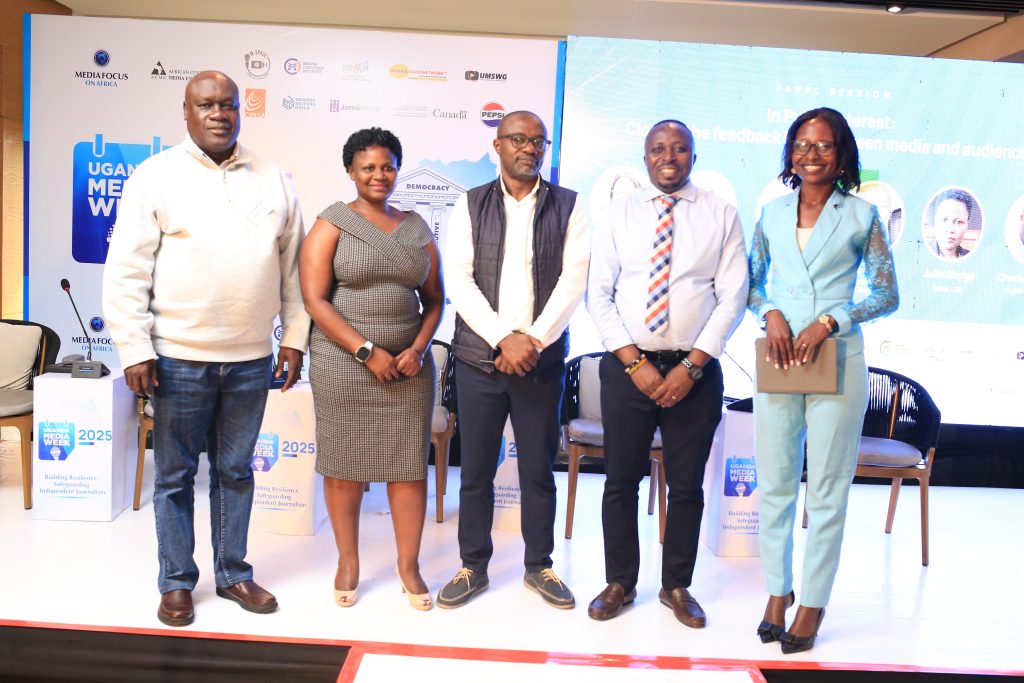
On December 17th, at Four Points by Sheraton Kampala, UEG convened a high-level Ombudsman Session under M-SPACE, bringing together senior editors, media executives, public editors, and practitioners. The session moved the conversation from theory to implementation.
About the session
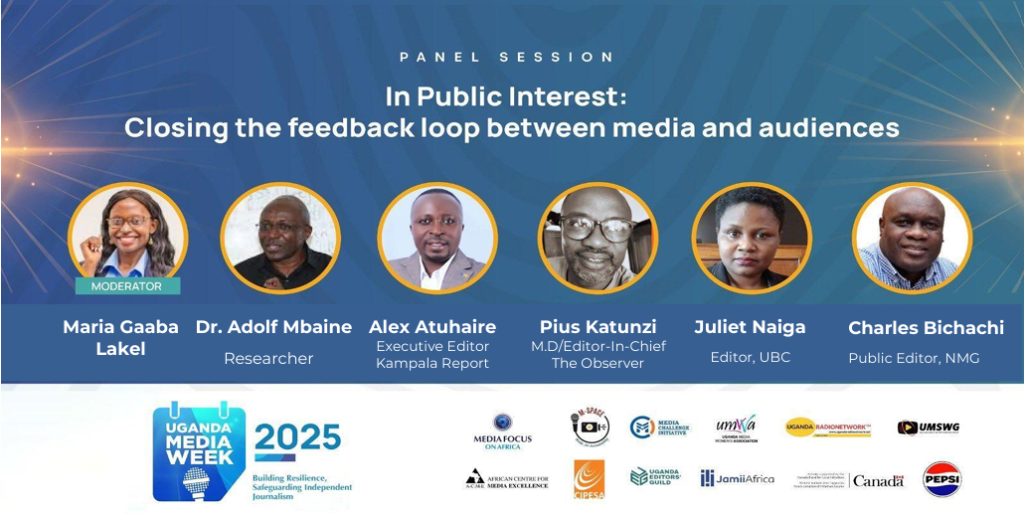
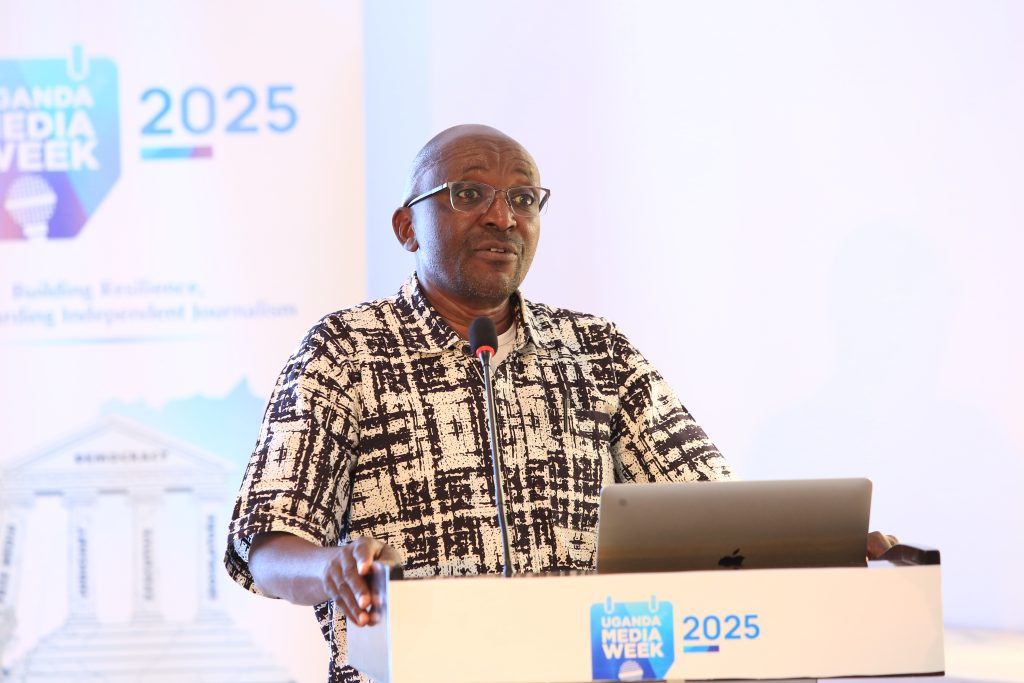
The session began with a presentation of the News Media Ombudsman/Public Editor Guide by Dr. Adolf Mbaine. During his session, he presented key findings, recommendations, and strategic significance of the Ombudsman Guide to media editors and relevant stakeholders.
Dr. Mbaine introduced the Guide’s purpose: to help media outlets establish or strengthen reader-rights offices that handle complaints and feedback. He emphasized that a professional ombudsman must balance public concerns with editorial judgment.
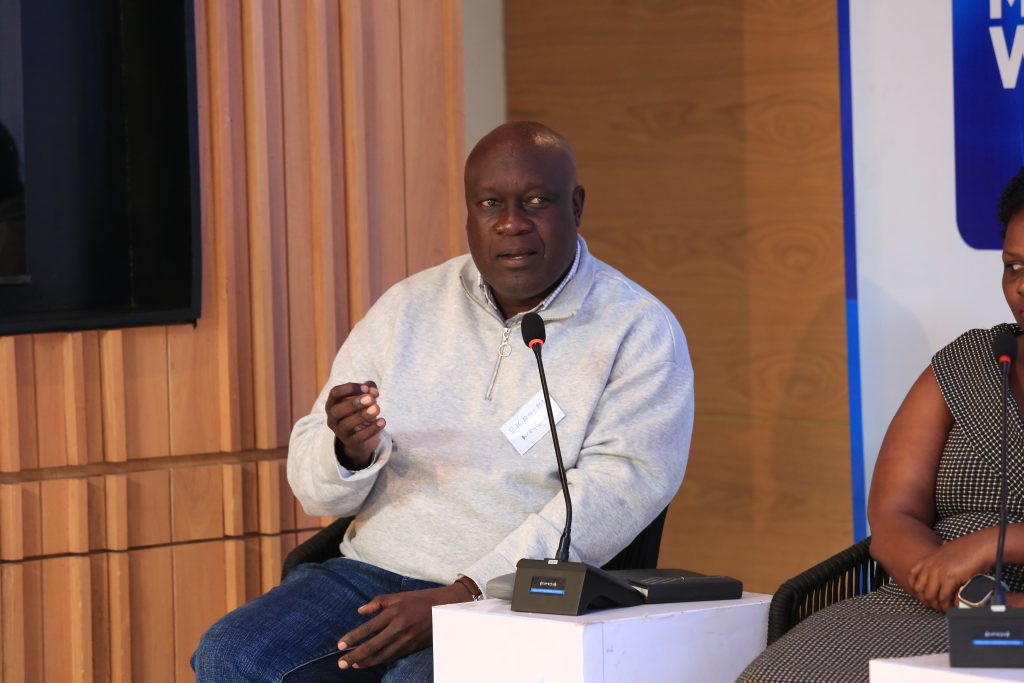
This was followed by a high-level panel discussion on self-regulation and media accountability, moderated by Gaaba Lakel Maria. Panelists included senior media figures: Alex Atuhaire (Executive Editor – Kampala Report), Pius Katunzi (Managing Director – The Observer), Juliet Nayiga (journalist and senior editor at UBC), Charles Bichachi (Public Editor, NMG), and Dr. Mbaine. The panel explored how news organizations can adopt Ombudsman practices, uphold ethics, and protect press freedom.
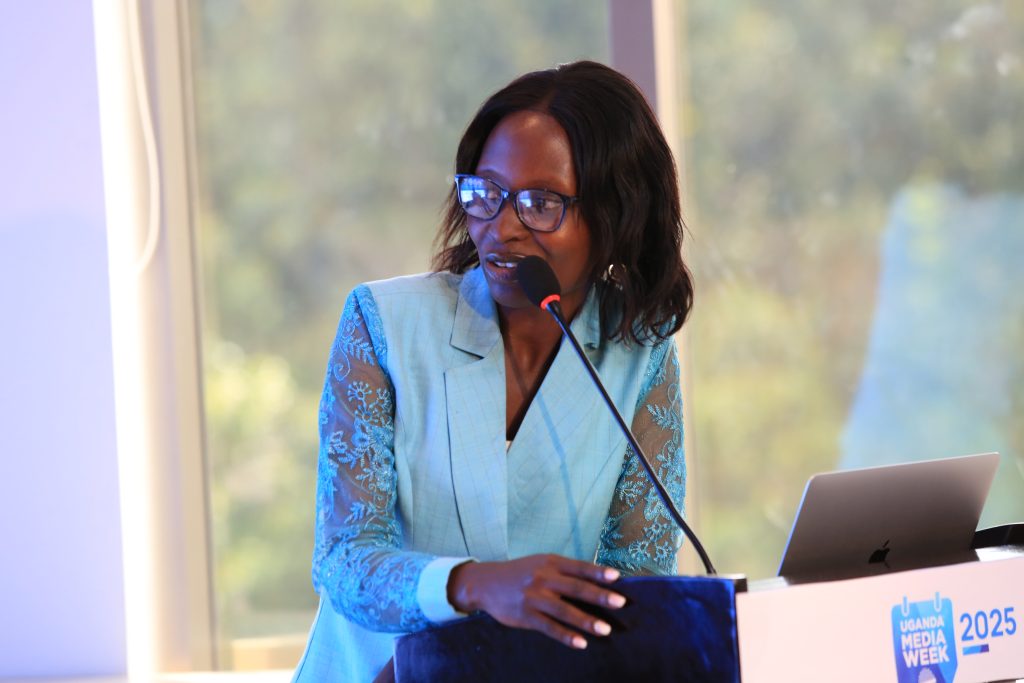
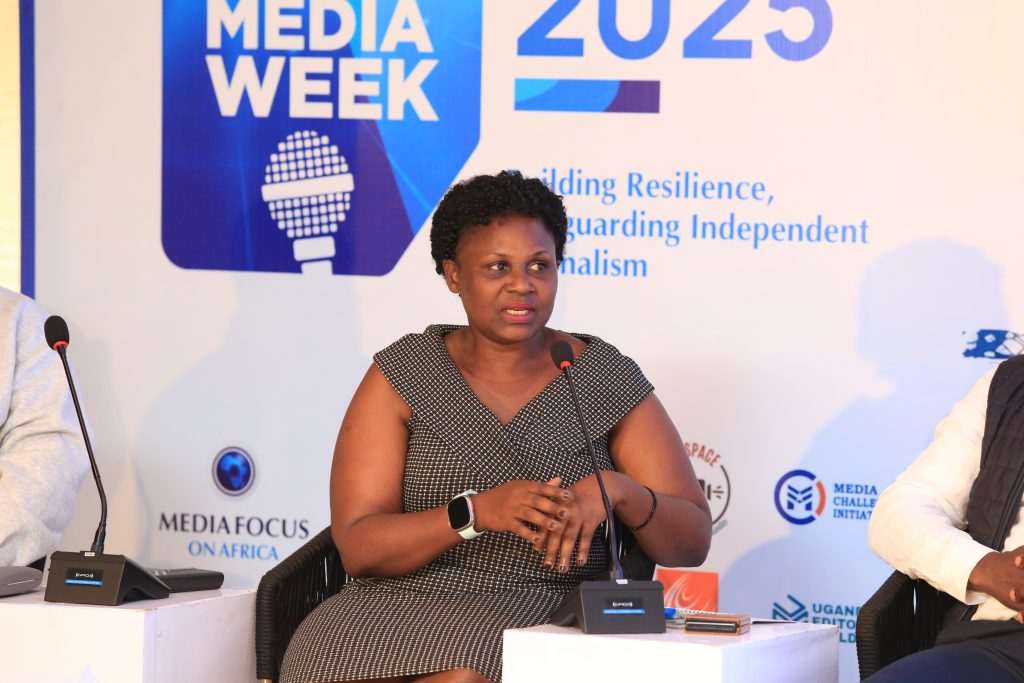
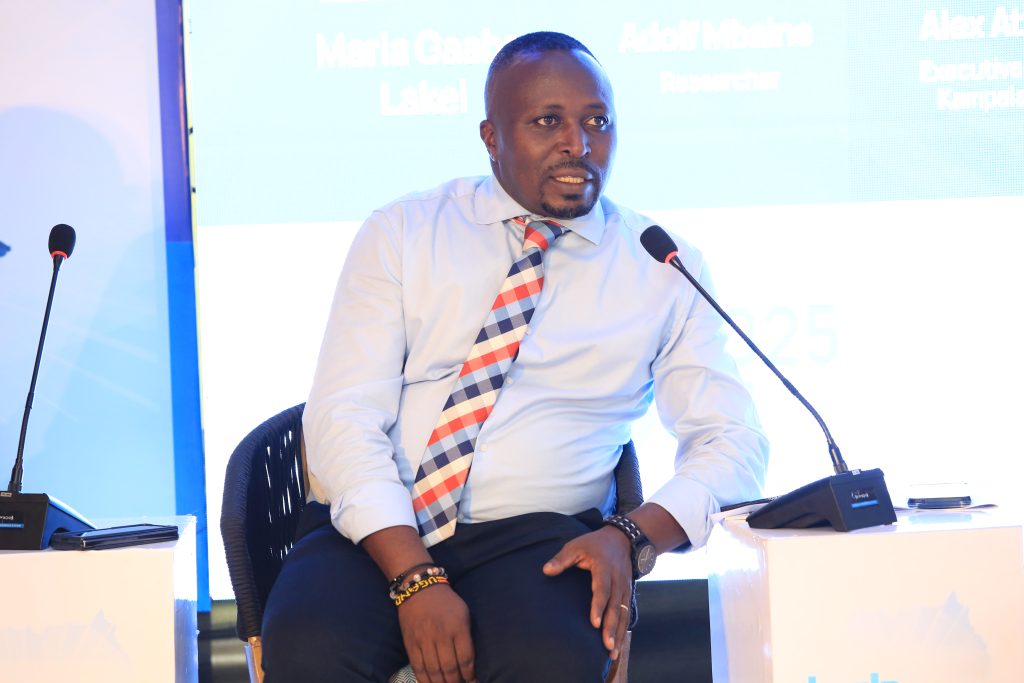
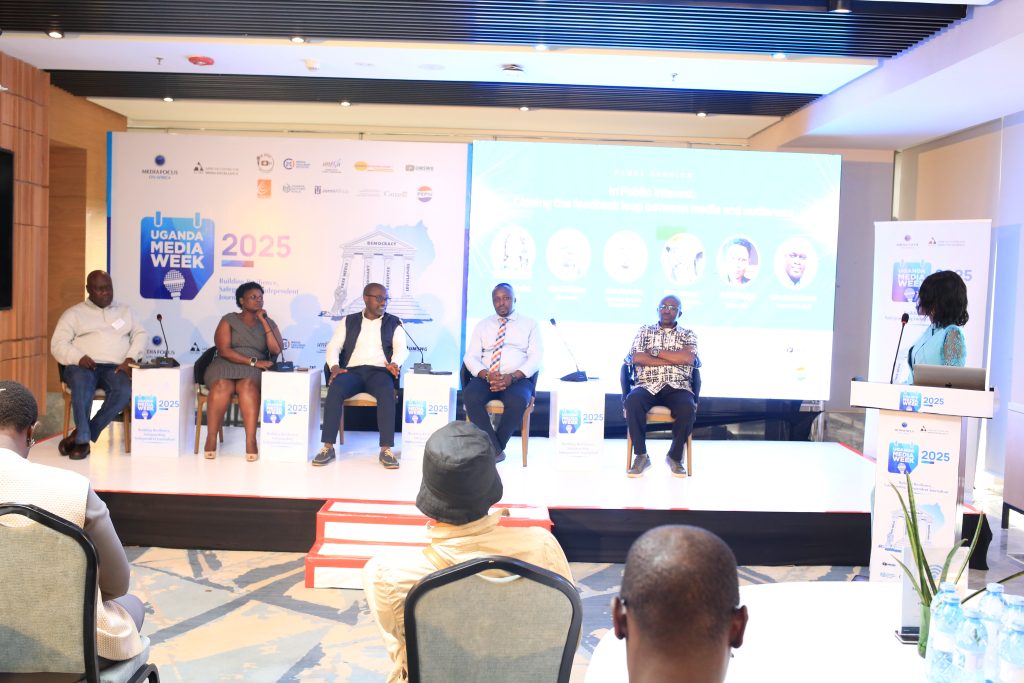
Later in the day, Fiona Akello of UEG introduced the Journalist Insurance Scheme, and Isaac Waiswa of Stanbic Bank presented its features. This scheme, effective November 1, 2025, provides medical and personal insurance to vulnerable journalists (with priority for women and election reporters).
The sessions concluded with a commitment from stakeholders to promote the Ombudsman Guide and the insurance plan as tools for strengthening journalism resilience and safety.
What the session solved
1. Reframed accountability as a strategic asset
A central shift emerging from the session was a reframing of accountability from a cost or risk to a value proposition.
Senior media executives publicly affirmed that trust is the media’s most valuable currency, and that the Ombudsman is not a threat to editorial authority but a mechanism for protecting credibility, audience loyalty, and long-term sustainability.
As one media executive noted, accountability initiatives such as the Public Editor help audiences distinguish professional journalism from the growing noise of unregulated content—an essential differentiator in the digital age.
2. Clarified the Ombudsman’s Unique role
The session demystified the Ombudsman as:
- An internal auditor, not a content creator
- A bridge between the newsroom and the public, not an external regulator
- A mediator, reducing legal risk and reputational damage
- A driver of a newsroom culture where corrections, transparency, and learning are normalized
Practical examples from correcting harmful reporting practices to ensuring cleared individuals are publicly exonerated demonstrated how the role directly improves journalistic outcomes without compromising editorial independence.
3. Addressed the “Affordability” barrier with innovation
One of the most persistent obstacles to adopting the Ombudsman role especially for smaller and regional media houses is cost.
Rather than allowing this to stall progress, the session catalyzed an innovative shared Ombudsman model, where multiple media houses could jointly support a regional or pooled Public Editor service. This model, now actively being explored by UEG, represents a scalable, cost-effective solution that could dramatically expand accountability coverage beyond large media corporations.
4. Elevated UEG’s role as a system builder
Beyond individual media houses, the session reinforced UEG’s institutional role as:
- A convener of difficult but necessary conversations
- A champion of self-regulation over state control
- A neutral broker aligning editors, owners, journalists, and the public
Participants explicitly looked to UEG for continued coordination, guidance, and piloting—positioning the Guild as a backbone institution for ethical journalism reform in Uganda.
Immediate Impact and Signals of Change
The session generated clear, tangible outcomes:
- Leadership buy-in: Media executives publicly committed to reviewing and adapting the Ombudsman Guide.
- Shared understanding: Senior editors demonstrated a deeper appreciation of the Ombudsman’s independence and strategic value.
- Actionable pathways: Consensus emerged around intentional implementation, clear operational guidelines, and newsroom sensitization.
- Innovation unlocked: The shared Ombudsman model moved from concept to active exploration.
Importantly, the dialogue shifted from “Should we have an Ombudsman?” to “How do we make this work in our context?”
Strengthening the Ecosystem: Journalist safety and resilience
The session also recognized that accountability cannot thrive where journalists themselves are vulnerable. UEG therefore used the platform to introduce a first-of-its-kind Journalist Insurance Scheme, providing medical, personal accident, equipment, and liability coverage particularly for freelancers, women journalists, and election reporters.
This complementary intervention reinforces M-SPACE’s holistic approach: ethical journalism is sustained not only by values and systems, but by safety, dignity, and resilience.
Why this matters
This work demonstrates a shift from short-term capacity building to long-term institutional change. Rather than focusing solely on individual journalists, UEG is:
- Embedding accountability mechanisms within organizations
- Strengthening self-regulation as an alternative to restrictive state control
- Building models that are scalable, locally owned, and financially realistic
- Reinforcing trust as democratic infrastructure
In a media environment where credibility is under strain globally, the M-SPACE Ombudsman intervention offers a replicable model for strengthening public-interest journalism from the inside out.
Looking Ahead
UEG is now positioned to:
- Support media houses in adopting and piloting the Ombudsman Guide
- Test and refine the shared Ombudsman model
- Expand newsroom and public awareness
- Document lessons to inform national and regional policy conversations
In rebuilding trust, UEG will not merely respond to crises. It is laying foundations
Follow our X handle for conversations on media rights and professionalism.
To support Uganda Editor’s Guild (UEG) work; reach out via info@ugandaeditorsguild.org